Fruit of the Spirit: Goodness
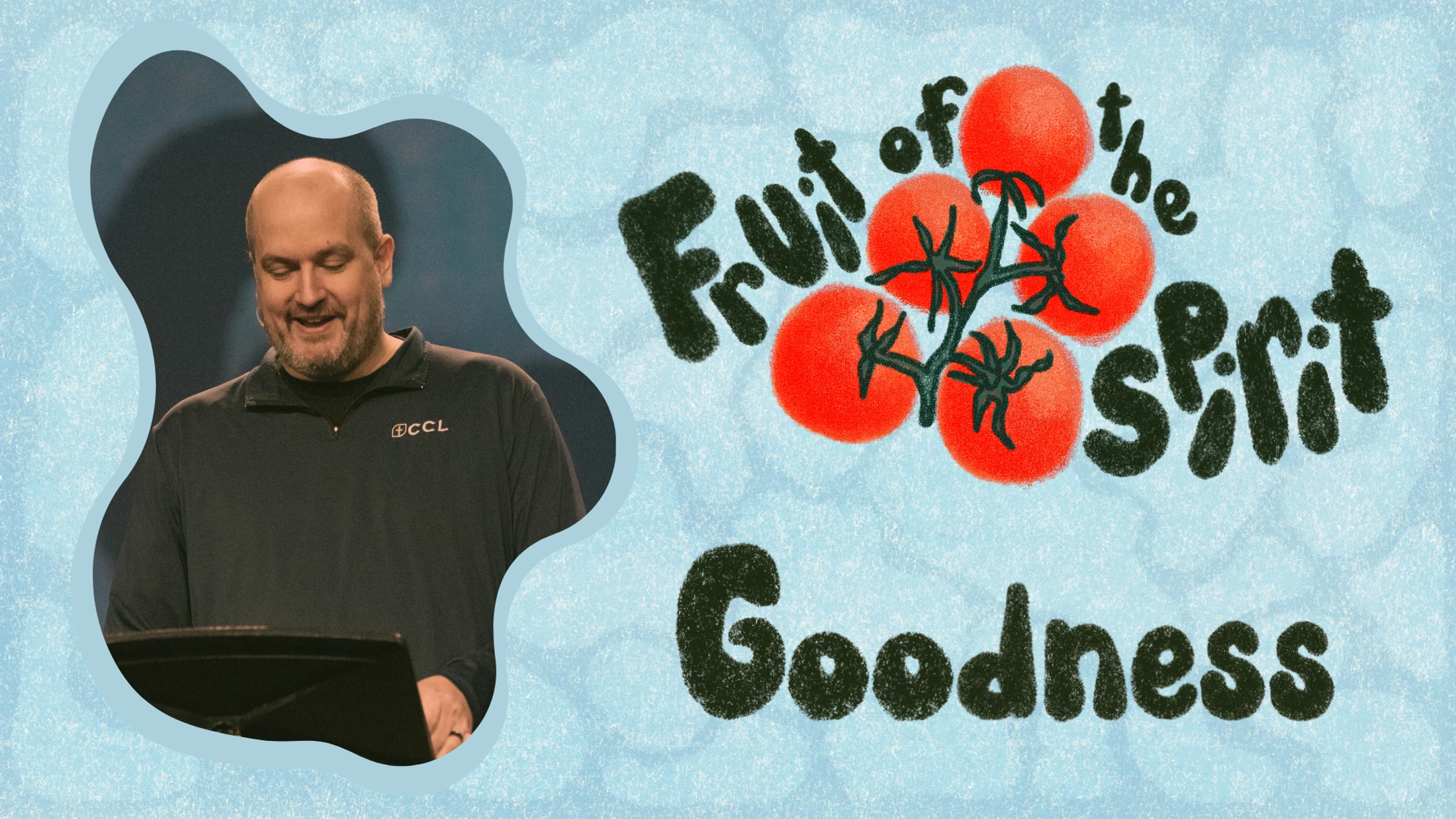
So. Well, good morning. My name is Micah. I'm really glad to be here with you today, and it is exciting. It's exciting to be here.
If it's your first time here or if it's maybe your first few times, if you're still new being around here, you should know that you are in a really good place. You got good people here. And I'm allowed to say, I don't work here. I'm a volunteer. So I can say that and not have any skin in the game on that.
But. But my family has been a part of this church for 11 years, almost 11 years. We love this group of people. So if you're new, just keep coming, and this will just get better and better. And I'll tell you, if you don't like the sermon today, just come back next week.
The regular preacher will be back next week. Okay? So, speaking of sermons, we're coming to the end of a long series on the Fruit of the Spirit. The Fruit of the Spirit is an analogy that the Apostle Paul uses to talk about what it looks like when we live a life that that's fully filled up with the presence of God. He names nine character qualities that you'd expect to see from someone who's living in step with the spirit.
Love, joy, peace, patience, kindness, goodness, faithfulness, gentleness, and self control. I got all nine, right? And so back in the day, I preached through the spirit, and I kept getting eight of the nine. I kept forgetting faithfulness. And my wife got a lot of texts that week, worried about her, but I got all nine today.
So today we're talking about goodness. What does it mean to be good? Goodness refers to moral excellence, right? It's an active desire to do what's right. It's more than just kindness or niceness, right?
When we're good, it means we're in the habit of doing the right thing in a given situation. Now, we're gonna put a pin in that. That's enough about goodness for now. And we're gonna come back to it. But I'd like to take you on a trip, call it a rabbit trail with me.
I just wanna talk about a couple other things that we're gonna come back to. Goodness, okay? You with me? You're flexible. You're feeling.
You're looking at me like, what's happening? I don't know this guy. It's gonna be okay. All right, let's go down a rabbit trail, looking at what it even means to have fruit, right? And you're like, micah, we've been in this series for weeks now.
We get it, Fruit. We get it. But just bear with me for a second. Paul writes a letter to the church in Galatia. There's a city called Galatia.
He writes a letter to the people in Galatia. And. And it's the letter to the Galatians, right? So Galatians chapter five is where we're today, where we have been. And here's what it says.
It says the acts of the flesh are obvious. Sexual immorality, impurity, debauchery, idolatry, witchcraft, hatred, discord, jealousy, fits of rage, selfish ambition, dissensions, factions, envy, drunkenness, orgies and the like. And you're like, man, if you're new here, you're like, I've been in this church for three minutes and we're talking about orgies already. But just Paul goes on. He says, I warn you, as I did before, that those who live like this will not inherit the kingdom of God.
But the fruit of the Spirit is love, joy, peace, forbearance, kindness, goodness, faithfulness, gentleness and self control. Against such things there is no law. Those who belong to Christ Jesus have crucified the flesh with its passions and desires. Since we live by the Spirit, let us keep in step with the Spirit. Let us not become conceited, provoking and envying one another.
Now, Josh has pointed this out a couple times, but notice here that it's fruit singular, not fruits plural. I just named nine things, but it's actually all one thing, right? The tree is producing a thing. And what we're doing is we're describing it with these different words. It's like different things.
Facets of a really well cut jewel. All right? And I want you to do me a favor. Take note of something. I want you to check out the second to last verse.
Since we live by the Spirit, let us keep in step with the Spirit. Just tuck that away. We're gonna come back to that. All right? Now, this idea of fruit isn't unique to Paul.
It isn't even unique to the New Testament, right? It goes back at least as far as the Book of psalms, the very first Psalm. Psalm 1, verse 1. This is how it starts. Blessed is the one who does not walk in step with the wicked, or stand in the way that sinners take, nor sit in the company of mockers, but whose delight is in the laws of the Lord, who meditates on his law day and night.
That person is like a tree planted by streams of water which yields its fruit in season, and whose leaf does not wither, whatever they do prospers. Now that's written maybe 1000 years BC before Christ, right? Or depending on when you went to school, maybe it's bc BCE before Common era. Nobody can explain what makes the Common era common, but we'll just stick with BC before Christ, right? So all the way back in the time of David, we're seeing this analogy of a person being like a tree and their life, the fruit of their life, being like this type of fruit.
Notice again the first line. Again, we're going to tuck that away. Blessed is the one who does not walk in step with the wicked. Again, file that away, we're gonna come back to it. But I love this analogy of a tree planted by water.
Right? Now, any water that's not frozen solid sounds amazing to me, right? It's the middle of February. I had to clean my windshield this week and I went to clean the windshield and all of the liquid that's not supposed to clean, that's not supposed to freeze at the gas station, you know what I'm talking about? All of that was frozen solid.
I was like, what am I supposed to do here, right? So yesterday my car broke down as I was driving my 10 year old to karate. And. And we're going to karate. So I'm wearing sandals.
So I had to walk on the road with sandals on. I was like, I'm getting frostbite here in my own town, right? So basically what sounds good to me is a beach, like a beach would sound really great right now. So we're walking on that. But I want you to use your imagination with me.
I know mostly we don't use our imagination in church, but we're going to today. So I want you to close your eyes and imagine what I'm gonna describe to you. And I don't know, like if you're online, you can't tell, but the lights are on in the room and I can see that most of the people in the room are not closing their eyes. So I can see you. Okay, so like close your eyes.
All right, so we're all gonna close our eyes and this is what I want you to imagine. I want you to imagine that six months from now. So today's February 23rd. So six months from now would be August 23rd. Okay?
It's late summer, going towards fall, and you're walking in the woods and, and you come to a creek or if you drive east to get to Whitewater, you come to a creek, alright? And it's kind of hot. So you sit down by the tree. Maybe the roots go down into the stream. Maybe you take your shoes off, dip your feet in.
You pick some fruit from the tree and you eat it.
Maybe you lean up against the tree and you close your eyes for a bit. It sounds nice, right? Now keep your eyes closed. Just imagine, if you can, if this isn't too weird, imagine what it's like to be the tree.
What's it like to be deeply rooted next to a flowing stream, to have everything you need to be unbent by time and weather and to provide food and comfort and beauty for anyone who walks near you.
Does that feel like your life? You can open your eyes. I love this analogy, but I would say it feels. We'll call it aspirational at best. And unrealistic is probably a more likely word.
I think I spend most of my time feeling like a squirrel planted by streams of mountain dew. Can I get a witness? Anybody else? Like, there's a lot going on in the outer household these days, and I think for a lot of us, that's the case, Right? It seems like our time is so full, our lives are so busy.
So let's pause. Let's fast forward now a thousand years in the future from that. Let's fast forward a thousand years to Jesus. Jesus talks about fruit trees, too, but he's not talking about being calm or being relaxed or being unhurried. He's talking about whether or not the fruit is good.
Okay, if you've got a Bible, turn to Luke, chapter six, verses 43 through 45. We're going to read this several times. So just go ahead and, you know, start picking it up because you're going to hear it again. No good tree bears bad fruit. Nor does a bad tree bear good fruit.
Each tree is recognized by its own fruit. People don't pick figs from thorn bushes or grapes from briars. A good man brings good things out of the good stored up in his heart. And a bad man, an evil man, brings evil out of the evil things stored up in his heart. For the mouth speaks what the heart is full of.
The mouth speaks what the heart is full of. A few weeks back, Josh referenced the movie Inside Out. I don't know if you've seen Inside Out. It's great. All the emotions are like people living in the control center of a teenage girl's head, Right?
It's a uniquely 21st century way to think about the brain and what it does sometimes. We talk about the brain today as like a computer. When I said Hey, I want you to remember this. I said, stick this in your memory bank, right? That's just how we talk about these things.
Sometimes we have the computer as a major analogy for us. And so everything is like a computer, computer. But. But if you go back 75 years before, there's computers, but they've got circuits. If you read the analogies that people were using at that time, people are talking about, like, feedback loops and control circuits.
And that's kind of the way we're talking about the brain. You go back 75 years before that. It's the era of the telegraph. Hard to believe telegraphs were not that long ago. And so people talked about the human body is like, it's got these telegraph wires.
We're sending messages through it. And if you go even further back, you go back to, like the Industrial revolution. You read big writers like Freud and those guys, everything's about the steam engine. So that's how. Everything's.
Everything that they talk about. It's like they conceptualize the human mind as a big steam engine. So everything's about pressure. And like, oh, I feel these pressure. And there's this drive and this pen up and release.
And like, all of it is like steam engine metaphors, right? Because the dominant model was the steam engine at that time. So none of those are wrong. It's not. It's.
It's like the dominant analogy of the time is the way that we think about things and talk about things. But back in the time of Jesus, the dominant analogy is stuff grows, right? It's an agrarian society. So to connect with his listeners, Jesus says, hey, it's like a tree. People are like, oh, trees.
I get trees, right? And the Keith question of a tree, if you're taking care of this tree and it's supposed to produce fruit, the question is, is the fruit good? Okay, let's read the passage again. No good tree bears bad fruit, nor does a bad tree bear good fruit. Each tree is recognized by its own fruit.
People don't pick figs from thorn bushes or grapes from briars. A good man brings good things out of the good stored in his heart. It's all congruent. It's all the same, right? The evil man brings evil things out of the evil stored up in his heart.
For the mouth speaks what the heart is full of. Are you a good tree? It's an easy question to answer. You just look at the fruit you're producing and see if it's good fruit. And if your fruit is good, then the tree is Good.
That's the analogy that Jesus is laying out. And this is really uncomfortable for us. This is not how we think about things in our society, right? It's fairly radical to our sensibilities because as a society we basically believe that, that everybody, or at least everybody who agrees with us politically, right? Everybody is basically good.
Right? And we're good. People who agree with us are good. We do good things because we're good. But if we ever do a bad thing, it's because of some external thing that happened to us, right?
As a society, we so want to believe that there's a fundamental break between our heart and our actions. Yeah, yeah, I messed up, but that's not who I really am. I mean, I didn't quite tell the truth, but that doesn't make me a liar. It's like, no, actually that's what a liar is, right? It's like, oh, I kind of cheated on my taxes, but I'm not a cheater, right?
And I took something that wasn't mine, but I'm definitely not a thief. I slept with someone who's not my spouse, but I'm not an adulterer. We so badly want to believe that we are good. Even in the face of evidence that says it ain't so. The way Jesus handles this is a lot more cut and dried.
Just cause I told a lie, does that make me a liar? Yes. Like that's how that works, right? It's the literal meaning of the word. Jesus says a good man brings good things out of the good stored in his heart.
So if good is coming out of me, where does that come from? But an evil man brings evil things out of the evil. Sword in the heart. If evil's coming out of me, where does that come from? For the mouth speaks what the heart is full of.
Everything that comes out of you starts out inside you. Think about it this way. You are so full of something, right? You're so full of it. What is it?
It's whatever comes out of you, right? I don't know what it is, but whatever it is, it is eventually going to come out. I want you to picture like an old timey chalice, like Indiana Jones style, big cup, hold it with two hands. Can you imagine that? Right?
And now imagine that it's full to the brim of something. We don't know what the something is, but it's full to the brim of something, right? And the chalice in this analogy is you. Okay, just to cut to the chase there, the chalice is you. And as we go through life, we're constantly getting jostled, so it's not hard to tell what's in the cup because whenever it's bumped, something comes out, right?
And so the question is, when you get bumped, what comes out of you? You've seen this happen, right? Like you talk to somebody and like something minor goes on and all of a sudden all this stuff comes out and you're like, what? Where did that come from? And it's like it came from in them or maybe it came from in us, right?
There's probably times when something's come out of us that we're like, I didn't even know that was in there. But there it is.
If somebody bumps into you, random encounter, something doesn't go your way, shoelace snaps as you're trying to get out the door, what happens in you?
Let's say your codependent husky wakes you up at 3:30 in the morning on a day you're supposed to preach, right? And you stand outside in a bathrobe in 20 degree weather waiting for the dog to poop. And then he just decides that what he really wants to do is, is roll around in the snow and sniff things, right? Like what comes out of you at that point. Hypothetically, If what comes out of you is rage or unkindness or swearing or jealousy or defensiveness or denigrating other people, I want you to consider the.
I'm not trying to get in your business here, but I want you to consider the possibility, consider the possibility that what came out of you is what's inside you. I want you to consider the possibility that maybe, just maybe, the mouth speaks what the heart is full of.
When I was looking up this passage, I actually couldn't remember. I couldn't figure out what translation I had learned this passage originally in. My parents made me memorize this verse when I was a little kid. And so I remembered what I had memorized and I couldn't find it. I was like paging through different Bibles, like, which one is it?
I looked at all the translations of this verse in Mark and I couldn't find it. When I googled it, I found out it was the 1984 version of the new international version. So the NIV is what I've been using on the screen. All the modern translations are great. I got no issue with any of them.
My theory of translations is the best translation is the one you actually read. So like, don't fight about it, just read whatever you're going to read and that's a good thing. But the NIV language got up, or the language of the NIV got updated in a few places in 2011, and I was still reading the 1984 version. I mean, in my head, I was doing the 1984 version. So all that to say, let me read you what I grew up.
The phrasing that I grew up familiar with. Okay, the first part's all the same. No good tree bears bad fruit. Nor does a bad tree bear good fruit. You're like, yeah, we've been over this.
Every tree is recognized by its own fruit. People don't pick figs from thorn bushes, grapes from briars. The good man brings good things out of a good stored up in his heart. The evil man brings evil things out of the evil stored up in his heart. For out of the overflow of the heart, out of the overflow of his heart, his mouth speaks.
Out of the overflow of his heart, his mouth speaks. So my question is, what overflows out of you? Is it love, joy, peace, patience, kindness, goodness, faithfulness, gentleness, and self control?
Or is it anger, fear, impatience, meanness, cynicism, forcefulness, and a lack of self control? A lot of times, if we have really negative thoughts, we think we can beat them by just having more willpower, right? Have more control, right? Hold the cup really, really, really tightly and make sure nothing spills, right? In the long run, I don't think that works.
The truth is always gonna come out. Now, I'm not saying you shouldn't have a filter, okay? I think a filter is a fine thing. A lot of us need a filter. Most of the people, most of the time, when I meet someone who, like, is proud of not having a filter, they're like, hey, I'm just being honest.
I tell it who I am. I'm just being real. And I'm like, well, who you are is a jerk. So maybe filter a little bit, right? Maybe instead, I know you're being honest, but maybe pretend to be a decent human being.
Like, we've all had that conversation with somebody at work, right? So just me. But the filter only gets you so far is all I'm saying. So anyway, this isn't something you can beat with willpower. You don't have goodness come out of you by trying harder.
Like Russ said last week, the apple tree doesn't make apples by sweating hard, right? It makes apples naturally, because that's what apple trees do.
If what's coming out of you consistently is not goodness, the long term answer to that isn't just grit your teeth and try harder. It's ask God to change what is inside of you into something that you don't mind when it spills out.
Let's look at that last line again from both translations. Two different ways to say the same thing. For out of the overflow of his heart, his mouth speaks, or for the mouth speaks what the heart is full of.
So what are you full of?
Somebody on Facebook posted this week, I want to be so full of Jesus that if a mosquito bites me, I want it to fly away. Singing there's power in the blood. I love that.
All right, so let's go back to the beginning, and let's look at this attribute of goodness, right? Goodness. Goodness feels like a virtue that we as a society have lost interest in. We've lost interest in goodness. Like, if I say to you, how you doing?
And you say, I'm doing good, right? You mean, like, my stock's up or I got a promotion or my health is good. You. You don't mean like, I'm doing good things. What you actually mean is, I'm doing well.
But English is hard, so we, you know, I'm doing good. Right? Are you actually. Are you actually doing good? Do you walk around doing good?
You should. I should. Right. Think about the words we use. If somebody calls you a goody goody.
That's not a compliment, right? Like, you get this. It's a way of saying that somebody does good things, but they do it for weird reasons, like they're trying to gain approval or they're trying to be better than other people. But we don't say that about any other virtue, right? You would never say, like, oh, they're such a truthy, truthy.
Right? They only say true things because it gets them what they want. Like, oh, there's such a patience, patience. Like, I just. They just do it to make people like them, right?
Oh, there's such a faithful, faithful person. I know it's just an act. Like, we don't do that for anything else, but we do it for goodness. Why is that so? My theory of that is that we're.
If it feels like we're incapable of believing in true goodness, if we're always looking for the catch and we're waiting for the shoe to drop. Maybe it's because we've seen so many people that we thought were good that weren't. There's been so many people that we thought they were good, but the goodness only went skin deep. It didn't go all the way to the Bone, right? They look good and they weren't.
And so we get cynical, as if all the goodness everywhere is just a facade. See, nobody thinks that shiny, happy people are actually happy, right? It's just a mask. Maybe we don't like goodness because goodness looks weak, right? We want leaders who will win for us, not have their hands tied behind their back by outdated virtues.
Again, we see this most clearly in politics. So much political commentary comes down to our enemies are bad, so we need to be even worse to beat them. Right? As if the goodness of the tree didn't go all the way to the root. I don't think you can really section off parts of yourself and say, this is the good me and this is the other me, right?
If you're good in one area of life, I would expect that to eventually work its way into every area of your life.
And if you cultivate cruelty or dishonesty or selfishness in one area of your life, there's no firewall to keep that from eventually becoming all of you. So what does it even mean to be good? What is goodness besides something that goes with gracious and great balls of fire? What is goodness? Like I said earlier, goodness refers to moral excellence.
It's an active desire to do what's right. It's what God is all the time. But it's actually hard for us to do the right thing all the time, which is why so many of us prefer to look like we're doing the right thing all the time. You know, in this series, Josh has talked a lot about, like, the real fruit versus the plastic fruit. You've heard that analogy several times, right?
The real fruit is goodness. The plastic fruit is good image, right? We all know someone who's more interested in looking good than being good. If we're honest, a lot of us are that person, at least some of the time. And the more it's true of us, the more we're that person, the harder it is to believe that it's not true of everybody.
Like, when you think of sincere goodness, who do you think of? Like, who is it in your life that you think of when you think of sincere goodness? For me, if I had to personify it, I think of my two grandmothers, right? They both passed away in this past year. They were both incredible.
They were like trees planted by water, right? They bore good fruit their entire lives. My Grandma Doris and my Grandma Lois were amazing women of God. They were kind, they were honest, they were helpful, and the world was better with them in it. I feel like people in their 90s are very rarely mediocre.
Have you experienced this? They're like either the very best people you've ever met, or they are the worst people you've ever met.
I think that's because all of us are on a trajectory. We're going in a direction, right? And that trajectory becomes more and more pronounced the longer we're on it. Both of my grandmas loved Jesus their whole lives, and they became more and more like him every year, year after year after year after year after year after year. Right.
It's interesting to think about my trajectory. It's interesting for you to think about yours.
If I keep going the way I'm going, will I be happy with the person I become?
If you keep going the way you're going, will you be more full of goodness at the end of your life than you are right now?
Now, if you're watching this and you're online, okay, you might not be able to tell this, but in real life, I'm quite tall. I'm 6 foot 7. I get compliments for being tall, which is always a little bit odd because it's not like I tried to work really hard to be tall, right? It's like a weird compliment to get. I chose my parents really well.
Right.
It's just genetics. It's not something to be proud of. But I am six, seven. I feel like maybe I'm starting to shrink a little bit, but I still round to 6, 7 at the very least. But I always wanted to be just a little bit taller.
Right? And if you're a certain age, you hear me say that, and you're like, I wish I was a little bit taller. I wish I was a baller. I wish I had a girl who looked good. I would call anybody.
Okay, well, if you can finish that lyric, then, first of all, you're my kind of people. And second of all, it's time to schedule your colonoscopy. So.
But I did. I wanted to be one inch taller. Because then instead of Micah 6:7, I'd be Micah 6:8, right? In Micah 6:8, I was named after the Old Testament book of Micah. In the sixth chapter, the eighth verse, Micah 6:8, the eighth verse, we read a great definition of goodness.
Micah says, he has shown you, O mortal, what is good. And what does the Lord require of you? To act justly, to love mercy, and to walk humbly with your God. You want to know what's good? Micah tells us God has shown us what's good, to act justly and to love Mercy.
And to walk humbly with your God.
Now, to act justly just means to act with justice. And justice is a word that's kind of added a lot of connotations over the last year, couple years. Let's simplify that down and say to act justly means do the right thing. Do the right thing. That's it.
Just do the thing. That's right. One of my mentors likes to say, do the right thing. He says, do the right thing. Take action.
There's a right way to. There's a right thing to do. And it's not sitting there waiting for something to happen. Do the right thing. And then he says, do the right thing.
Right. There's a hundred bad choices that you could make. But in most moral situations, there's one good right choice. Do the right thing. Do the right thing.
Right. Not the okay thing, not the. Not worst thing, not the thing that's less bad. Do the right thing. And then he says, do the right thing.
This is the result of the action that you take. Commit now that when the moment comes, and you'll know when it comes, that you'll take the right action that leads to the right outcome. Do the right thing. So what does the Lord require of you? To act justly.
To do the right thing, but also to love mercy. Remember what Paul said at the beginning or at the end of that first passage? He said, let us not become conceited, provoking and envying one another. Once you commit to acting justly, it's easy to be impatient with people who haven't committed to that right. It's easy to be angry or threatened by people who aren't doing the right thing.
So sometimes we look down, we look at our own actions maybe a little more highly than we ought. And once we start pursuing goodness, it becomes easy to get a little bit judgy, right? So don't be that guy. Don't be that lady. Be willing to give others the grace that God gives you.
So, one, we act justly. Two, we love mercy. The thing that lets you do both of these things is the same. We walk humbly with our God. Walk humbly with your God.
Remember what Paul said. Remember that way back at the beginning? He said, keep in step with the spirit. That's a walking metaphor. Remember what it said in Psalms?
It said, don't walk in step with the wicked. Life with God isn't a sprint, but it's also not even a marathon. It's a walk in the Garden of Eden. Adam and Eve had the opportunity to Take evening strolls with God. This wasn't about fitness.
It's not like they were having trouble getting their steps in. Right? They strolled together, taking time and talking. And God wants that with you. He wants to walk with you through every aspect of your life.
Remember that Doing what's right isn't about making God love us. Right? He already loves us. We don't need to earn his approval. We don't need to get our lives right before we come back to him.
Right. There's not really anything that you're going to be able to do that's going to, like, surprise or impress the creator of the universe. So maybe just don't try, right? Just enjoy the fact that he wants to walk with you.
I. Full disclosure, I am not a walker. My wife loves to take walks, and I love to spend time with her, but I hate taking walks. If I'm doing a physical activity, I want to win at it. And you can't win at walking.
I like to hike when we're going to a place, right? I did a week on the Appalachian Trail, and I was like, I'm do the whole thing. But, like, if I go to Mitchell Memorial Forest and I get out of my car, I go to the trailhead, I take a big loop, and I end up back where I started. That, to me, is just about hell. It's just like, why did we even do this, right?
But that's the analogy the Bible uses. Life is us taking a walk with God. Not that there's no destination, but we're going at a pace that allows us to talk back and forth, to be around each other. And that's why we take communion every week, because we need to be reminded of that. Otherwise, I forget that everywhere I go, Jesus is walking with me, ready to talk.
Okay, stop. I see what you're doing. Okay? This is important. There's going to be plenty of time to get your stuff ready, okay?
I love you. Just wait.
I promise you'll have time. This is important. I want you to hear this, okay? Everything the Old Testament says is true. Micah says, God has showed you, O man, what is good.
Okay? But on this side of the New Testament, we could just as easily, maybe even more accurately, say, God has showed you, o man, who is good. Who is good. Because there is someone who has acted justly at every point in his life. There is someone who has loved mercy, who has walked humbly with his heavenly Father.
Jesus has given us an example to follow. If we can just remember to follow him. No amount of willpower is going to make you into a good person. Eventually you will reach your limits. But if you can be transformed by spending time with Jesus, if you can be transformed to be more like your Savior, then you don't have to grit your teeth.
You can just naturally be the kind of person that overflows with goodness. And that's my prayer for you today. Not that you're going to magically get more willpower or even that you'll suddenly just kind of get some more goodness in you, right? My prayer for you is that you would be able to recognize that Jesus is walking with you all the time.
I pray that you would learn to see the evidence of his goodness.
Friends, Jesus has been so good to us. He's been good to us. And if you don't know what goodness looks like, look at him. Let's pray.
Heavenly Father, you're good.
Pray that you would show us that you would remind us how good you are to us. Show us that evidence, Father. Let us see it maybe for the first time, in your name. Amen.