Fruit of the Spirit: Kindness
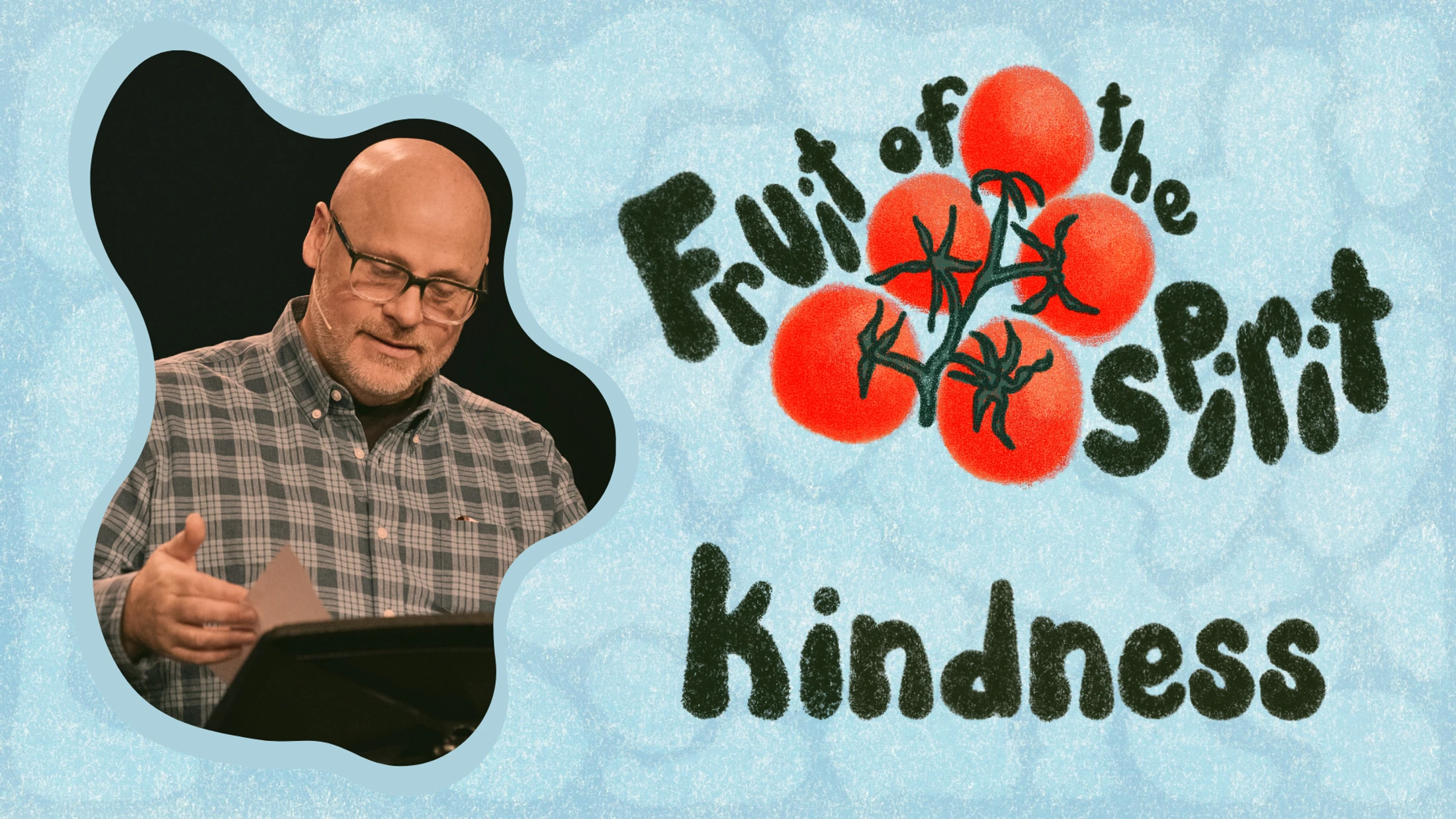
I'm Russ. It is good to be with you. I'm one of the ministers here, and we've been walking through teaching through the Fruit of the Spirit. Each week we've landed on a challenge because following Jesus is actually something we do right. And last week's challenge was about patience.
And I love how many of you are willing enough to try, including one of you who let us know that they got to practice almost immediately after Sunday's service, when his wife's sweet tea exploded all over the car. And during the cleanup, his first words were, thanks, Josh, about being patient in that moment. So I just want you to know that y' all are doing really good work by taking up the challenge, and let's keep it up. Right? So now, we've already seen that when Paul lays out the Fruit of the Spirit, before that, he details the acts or the flesh.
The fruit of the flesh. And he says, you know, that they're obvious. And then he makes a list. Here it is. Sexual immorality, impurity, debauchery, idolatry, witchcraft, hatred, discord, jealousy, fits of rage, selfish ambition, dissensions, factions and envy, drunkenness, orgies, and the like.
That's one list he made. Paul liked these lists. He's writing to a young friend named Timothy, and he gives another similar. Here's this list. People will be lovers of themselves, lovers of money, boastful, proud, abusive, disobedient to their parents, ungrateful, unholy, without love, unforgiving, slanderous, without self control, Brutal, not lovers of good, treacherous, rash, conceited, lovers of pleasure rather than lovers of God.
One more, and this is a quick one. And this is to the church in and around Ephesus. And here he says, get rid of all. And here's the short list. Bitterness, rage and anger, brawling and slander, along with every form of malice.
I don't know about you, but I read this one, and it reminds me of my elementary school playground.
I was a small, unathletic, nerdy little kid that the other kids would call Porky. Not. Oh, thank you. I heard a out there. Not because I was heavy, but because I had a tragic Porky Pig style stutter.
You all thought that pig was funny. I did not. Right?
But even from that moment, I recognized, you know, the playground can be a dangerous place. And it's not unlike the world we live in. Right? Because it's a fruit of the flesh type world where things like rage and anger and slander are normal. And it's a dangerous place.
So for you Whether it was a schoolyard or your home or the place you work or a marriage, or just as you have lived and moved through the world, you, like me, have suffered the consequences of living in a fruit of the flesh kind of world, right? You bear the wounds of these things. In a church our size, the ways we've been wounded are probably uncountable, right? And there are words we can apply to those wounds. Words like dismissed or demeaned or shut out, or you've been lied to or manipulated.
You were looked down on or betrayed, rejected, beaten up, mocked, excluded, blamed, thrown under the bus, talked about behind your back, cheated, touched in the wrong ways, neglected, disrespected. And boy, this list could go on and on and on. And here's the thing, though. Paul wrote these lists, and he wasn't writing to the world, he was writing to the church, right? Like the fruit of the flesh isn't just out there, it's in here.
And too many of you know that all too well, right? You have been wounded just in the same way, but wounded by people who attended church every Sunday. And I want you to know none of that is okay. Whether it happens out there or in here, it is not okay. Picture the church where Paul has to write.
Hey, get rid of bitterness, rage and anger, brawling and slander, along with every form of malice.
His very next words, it's Ephesians 4, 31, 32. He says this. Be kind. Be kind and compassionate to one another, forgiving each other. Just as in Christ, in King Jesus, God forgave you.
And here's where we hit the fruit of the Spirit. That word, kindness. As we've talked about the fruit of the Spirit, we've recognized that it's just simply when we collaborate with the Spirit, what he wants to do in our lives and through our lives, these things begin to grow up in us. The metaphor is fruit. Fruit doesn't grow on its own.
But I've never seen a fruit tree sweat, right? Like, a fruit tree isn't like, oh, I just got to, like, really sweat out some fruit today. It's not how it works, right? It's real simple. The branch, you and me, are connected to the vine or the trunk.
And that trunk, that vine has got deep and healthy roots. The soil is good, and we are sustained and nourished by it. And then what happens? Fruit begins to come naturally. And this is how we're changed, right?
This is how we are transformed over time into the image of Jesus to begin to think like he thinks, to be like him to do what he does, not by trying, but by doing the things that connect us to the Spirit. And in partnership like we're junior partners in this right? In partnership with him, we begin to experience and to share things like and here's the list. Through the spirit. Galatians 5 to share things like love and joy and peace, forbearance.
It's patience, kindness, goodness, faithfulness, gentleness, and self control. Against such things there is no law. So let's zero in on kindness in the Bible, Kindness is a little different than we might think of it today. It's actually about something being useful. It's applied to things the Bible, but then it's applied to people like it is here.
So being kind is about being useful in a good way for other people as opposed to being harsh or bitter. So it's more than being gentle or polite. Kindness just simply does something useful. Heard this line this week? Kindness is the virtue of a man whose neighbor's good is as dear to him as his own.
Now, I like a good functional definition. And by functional I mean just I can know whether I'm doing it or not, right? So here's my best shot that kindness is seeing someone, honestly seeing them, and then acting on what we see. Kindness pays good attention. So when I was in my early 20s, my life imploded, my marriage crumbled, I thought I lost my career and I mostly had myself to blame.
And I had friends, a young couple who I just met. But they opened their lives to me and I lost track. I cannot count the number of hours I spent at their dinner table with meals with them and their young children with me on their couch, them listening to me, sitting quietly or just hanging out together. They saw me and they saw what I needed and they acted on what they saw and invited me in. They were kind to me.
So a kind person is someone who accepts you where you are, who allows you to be yourself with them, helps you to see and take opportunities to grow. Often a kind person just wants more for you than maybe even you want for yourself yet. Right? A kind person sees you and acts on what they see. And we need to be clear that being kind is not the same as being nice.
This is what we've been calling the fake plaque fruit, right? Niceness. Niceness just tries not to rock the boat ever. It's. It's more of a commitment to keep a false peace.
Right? Just in order to avoid any kind of conflict. Niceness is concerned about me, not you. Being nice is more worried about being liked Right. Than being useful or helpful.
And niceness just tolerates people. And I gotta tell you, nobody wants to be tolerated, right? And underneath all of that, underneath all of that is this evil twin right, of comfort, convenience, self protection. It's not that these are bad things, but when they become our ultimate things, like the things we want, the things we have to have our lives sour. See, kindness takes courage.
It's risky, it's not comfortable, it's not convenient. A nice person doesn't bully or cause problems. Sure. A kind person, however, stands up to a bully and solves problems. Kindness requires strength, courage, honesty, authenticity.
And kindness will always make us vulnerable. In my experience, the kindest people I know are fierce because again, they will see somebody being bullied and act on it, but they will also see the bully for as a person that God loves and act on what they see. They will see the person who's being excluded and run to welcome them. They will see someone who's hurt and comfort them. They will see somebody who's celebrating and celebrate with them.
Niceness doesn't really cost us anything. It's not the case with kindness. Kindness always cost us something. Could be a little bit of money, it could be some time, it could be just risking being misunderstood or rejected. But kindness always cost us something.
Comfort and convenience. When we're committed to those things, they keep us at arm's length from people. It reduces kindness or love to this just kind of feeling, like to a general, vague sense of warmth towards other people. And that thing is useless.
Comfort and convenient asks, how can people be useful to me? Kindness asks, how can I be useful to them?
Loved what this British scholar wrote N.T. wright. He said, the quest for justice is all too easily degenerates into the demand for my rights or our rights. The command to kindness ask that we spend our time looking not at ourselves and our needs, our rights, our wrongs that need writing, but instead to look at everyone else and their needs, pressures, pains and joys. Kindness is the primary way of growing up as a human being, of establishing and maintaining the richest and deepest of relationships.
And that begins with God himself for us. So here's Paul writing again, and he's writing to a church that's kind of split. There are Jewish Christians and there are non Jewish Christians and they don't get along. Sound familiar? And so he looks at them.
This is Romans, chapter two. And he says, y', all, that's. It's a plural word here, right? Y'. All.
All of you therefore have no excuse you who were, who passed judgment on someone else. At whatever point you judge another, you're condemning yourself because you pass judgment. You who pass judgment do the same things. Now we know that God's judgment against those who do such things is based on truth. So when you, a mere human being, pass judgment on them and yet do the same things, do you think you will escape God's judgment?
Just like a human truth here, and Paul's finger is on it, that one of the ways people in the church have been most unkind is when we have judged people right there. There is a religious spirit we can have that looks nothing like God or Jesus. Jesus makes it clear. He says the Son came into the world not to condemn it, but to save it. And yet we are so bent on condemning it ourselves, as if being right is somehow excuse for being harsh, right?
So let's just be clear. This is really helpful. If you find yourself in you that you are more angry about other people's sins than you're heartbroken over your own. That's a thing to pay attention to because it's not okay, right? And Paul's finger is on it and then he says this and this is so good.
Or do you show contempt for the riches of his? God's kindness, forbearance and patience, not realizing that God's kindness is intended to lead you to repentance? We invert this all the time. And not only do we get God wrong, it somehow turns us into being wrong. Because what we think is that God is angry with me and he's angry with me until I repent and then he's kind to me.
It's not who God is, right? It's his kindness that leads us into repentance. And what does repentance do is we begin to reorder our lives around him. We begin to experience more and more of the healing and wholeness in our lives that he wants for us. God is kind.
We could walk through the Bible and see it over and over again. Here's just early in scripture, in Exodus, chapter three, God meets Moses for the first time. It's this burning bush story. And God says to Moses, I have indeed seen. He sees the misery of my people in Egypt.
I have heard them crying out because of their slave drivers. And I'm concerned about their suffering. So I have come down to rescue them from the hand of the Egyptians and to bring them up out of that land into a good and spacious land, a land flowing with milk and honey. He sees, he hears us and what does he do? He acts on what he sees.
And he recruits an everyday dude like Moses to join in. Later, he's talking to Moses and he describes himself this way in Exodus 34. The Lord, the Lord, the compassionate and gracious God. Slow to anger. Slow to anger.
Abounding in the word is actually loving kindness. Abounding in love and faithfulness.
Yeah. If you start to read through the Bible, you can find times where it looks like God's doing things that on the service don't look kind. But when you examine them, you begin to see that they are God's response to evil and justice. And he's saddened every time he has to do do it.
And then somehow most of us have been given this image of God that's maybe stern or angry or distant. And unfortunately, the church has often reinforced that image by the way that we have behaved. As I recognize maybe sitting here right now, wherever you're at, that you may think God has disappointed in you because clearly you're not doing enough, right? You're not praying enough, you're not giving enough, you're not devoted enough. And if that was true, why would you want to trust Him?
Like, who enjoys being around somebody who's constantly judging them, pointing out their failures, or reminding them of their shame? Here's the good news. That is not who he is. He is kind. God didn't sit back and let us suffer the consequences of our sin.
What did he do? Ultimately, he moved toward us. He entered into the world as one of us in King Jesus. And when he saw brokenness of the world around him, he saw our sin and the ugly results of our sin. Again, Jesus moved towards us, not away from us.
He sees us and moves towards us. Can you trust that? Do you really believe that? That Jesus deepest impulse and most natural instinct is to move towards you? Not away to move toward you in love?
When you scream at your kids simply because you can, do you see him moving towards you in love? When you've binged porn again after promising not to, do you see him moving toward you in love? When you feel guilty because you know you should pray, you should read the Bible, and you're not, do you see him moving toward you in love? That's what Jesus does. That's what God does.
When Jesus teaches about God, he's got this. Well, he's got this unique teaching where he says, hey, we all know murder is wrong, right? But hating someone is just the same as murdering them. And he says sleeping with someone you're not married to is wrong, but lusting after them internally is just the same. So he's pointing at the way we see people, and he's rooting it somewhere.
So he's saying, hating or lusting after someone are things that happen in here. Nobody has to know that those things are happening, right? And yet God takes that person, that person who is the object of my hate or my lust, takes that person, his image, in them. This is Genesis 1, right? That person is made in God's image.
And he takes that so seriously that to treat anyone with anything less than the full dignity and respect they deserve simply for being human in his image is wrong, even if we're just imagining it, right?
And Jesus says, love your neighbor. Then he ramps it up. Love your enemy. Pray for those who persecute you. He teaches about God, and the God he teaches about is a kind God.
He says he's like a father whose son broke his heart and left. And yet he waits and longs for him to return. And when he does, he throws a party. Says God's like a shepherd who goes hunting for the one sheep that got away. He says God is like a money lender who cancels the biggest debts.
And then here's Jesus, God on earth, showing us what God is like. And he puts him on display. And what does he do? There's a contagious leper that needs healing, and Jesus touches him to heal him. There's a desperate woman, and he heals her.
And he calls her daughter. Do you hear the kindness in that? He sees a member of the religious elite who's curious about him, but who's afraid of being seen with him. And so he meets him at night under the COVID of dark and has a profound spiritual conversation with him. He sees a Roman soldier, a member of the global military superpower of his day and an oppressor of Jesus people.
And he sees him as a man, as a father with a sick son, and he heals his boy. He sees the religious leaders who are right, like they're right, but they're also judging and excluding everyday people. And Jesus confronts them, saying hard things like, woe to you. He starts calling names, whitewashed tombs, snakes, blind guides, right? But he's not saying it with contempt.
He's trying to wake them up. He wants them to turn to him.
He looks out over the city, city full of people who are going to turn on him, betray him at the cross. And he weeps over them. He's kind. Came across an sermon from an old Scottish preacher long time ago, George Morrison. He said, the great secret of the tender heart lies in the fellowship of Jesus Christ.
It is a continual wonder that Jesus about Jesus, that he was so strong, so strong and yet so tenderhearted. No authority could make him fearful, no array of power could ever daunt him. And yet a bruised reed he would not break, and smoking flax he would not quench. He was not tender because he knew so little. He was tender because he knew so much.
All that was hidden from dolore eyes. He saw all that men had to bear and battle through their helplessness, their crying in the night, their inarticulate appeal to heaven. All this was ever audible to Jesus and kept his heart as tender as a child's. And he never lost the tender heartedness. Even in the darkness of the cross.
Men scorned him and they spat on him and crucified him. Yet Father, forgive them, for they know not what they do. And what I say is that when the mind of Christ is given by the Spirit to you and me, then whatever happens, however we are treated, we shall be kind to one another, tenderhearted.
Heard a writer, spirituality and religion, a lady named Phyllis Tickle once say, no real authentic community can exist without answering the core human question. Am I safe with you?
So in a fruit of the flesh kind of world that's dangerous and harsh, we are a fruit of the spirit kind of people, right? And we ought to be the safest of all. As we put the life of our King Jesus on display in our own lives, we will see people for who they are and act on what we see. And if we aren't that for each other, and if we aren't that for the world, who will be? Who will be?
So to live this way, we would be known as people who were accepting, graceful. As people who were open about our own flaws and struggles. As a people who are willing to suspend judgment, careful to understand the other without letting go of our convictions, right? Pausing long enough to discern if something actually is wrong or if it's just simply different. We'll be known as people who put ourselves in other people's shoes, imagining what it might be like to be them and what they might be feeling and then to actively meet them where they are.
We've been known as people who never try to control other people, people who are never manipulative, never coercive, people who are honest that we tell the truth, even if it's a hard truth, but we always tell it with care. We simply be a people who listen. And we would be a people who never give up, never write off anyone. We would Be kind. You want friends like that, a home like that, church like that, social media feed like that.
Not sure that one's possible. There's no algorithm for kindness, you know. Careful.
So let's get to our challenge. How can we cultivate kindness? Let's go back to Jesus. Here's his teaching, says this, and if you do good to those who are good to you, what credit is that to you? Even sinners do that.
Even scoundrels are like that. And if you lend to those whom you expect repayment, what credit is that to you? Even sinners lend to sinners expecting to be repaid in fold. But love your enemies, do good, do good to them, and lend to them without expecting to get anything back. My buddy Gary calls this crazy talk, right?
Love your enemies, do good to them, lend to them without expecting to get anything back. Then your reward will be great and you will be children of the Most High. Because he is kind. To who? To the ungrateful and wicked.
Be merciful, just as your Father is merciful. Jesus is saying it's not inherently Christian to be kind to people you like, but it is to be kind to people you don't.
Jesus knows that if we can be kind to the people we don't like, we'll have no problem being kind to the people we do. So he calls us to love our enemies, do good, good to them. And now we know that to dehumanize them or demonize them are not options for us any longer. Indifference is not an option. We don't get to be kind on our own terms.
We've surrendered to Jesus, right? We don't get that choice anymore. We gave it up. It's only kindness when it's on his terms. And he says, our King commands us to pray for those who persecute us.
So here's the challenge this week, this week, think about someone who you don't like and then ask God to bless them in a tangible way. This does not need to be the worst person you know, but it could be, right? You can let God lead you to determine who they are, but do this every day this week, and you probably already have the person in mind. Like, for most of us, it probably happened like that because it's the person you don't really want to pray blessing for, right? Identify that person, think about who they are and what might be a blessing to them, and then ask God to do it for them.
See them, pray for what you see. So if they're old, you can ask God to ease their achy. Joints. If they're married, you can ask God to strengthen their marriage. They've got a stressful job.
You can ask God to ease their anxiety. If they're just a human, which they are, ask God to show them how much he loves them and do it. Every day this week, set a reminder on your phone to remind you to do it, whatever it takes for you. Now, I've seen kindness over and over again up close. And the person I'm closest to, and that is Jennifer Howard, my wife, who is.
Well, she once had a boss refer to her as the Velvet hammer. Right? The velvet hammer. She came home, she told me that, and I said, hey, Velvet, that's growth, right? You used to just be the hammer, right?
This is who she is. She's the sister who shoots straight. And I rolled into home one day, and she was standing in the front yard with a few of our neighbors. And I thought, how cool. She's getting to know some neighbors.
We'd never met until I heard the story, right? So she had taken our two small dogs out at the time. We had a small corgi and a Jack Russell, and she put them on leads when suddenly a loose pit bull jumped on top of our corgi. For context, we live in Price Hill. It's a neighborhood where people, like, rightfully so, have a need for a higher level of security and protection.
So it's common for people in our neighborhood to own pit bulls, and it's common for them to train them for protection. So don't pet dogs you don't know in my neighborhood, right? And now there's this pit bull on top of our corgi, and she can't tell what it's doing to the corgi, but she knew it was a neighbor's dog. She didn't know the dog, didn't know the neighbor, but she knew it was his dog, and she didn't know what the pit bull was doing. And so she went into a kind of protection mode of her own, started shouting for help.
And then she had one thought in her brain. She remembered hearing somewhere that if you're ever caught in the teeth of a shark, bop it on the nose. You know what she does? She punched the pit, right? She bops it in the nose like this.
The pit does not expect this. It didn't hurt it, but it's like, what was that? Right? So it backs up just enough for her to be able to swoop the corgi up. Still not taking time, because now she's concerned for the other dog because she has swooped the corgi up, running it inside, setting it down to rush back out to get to the Jack Russell.
And when she sets back out now the neighbors have shown up. They heard her shouting. And the lady next door came out, and a couple came out from across the street. And they're standing there with a pit bull who seems fine, who didn't do a thing to our dogs. And the owner of the dog kind of slinks up, takes the dog by the collar and walks it back to his house and doesn't say a word to any of us, any of them.
And this is the moment I show up and I'm like, you're meeting the neighbors. They leave. And she. Adrenaline is still pumping. She's shaking like this.
And this is what she does. She said, you're driving me to Kroger right now. She's like, I need you to drive me to Kroger because I can't drive. And we're buying three packs of killer brownies. If you don't know what killer brownies are, you're welcome, because now you do.
They are, like, touched by the hand of God. They are an extraordinary brownie. If you're willing to. To pay for an extraordinary brownie. They're only available at some Kroger's, but I do happen to know the downtown, beautiful downtown dent Kroger has them.
And she looks at me and she says, we're buying three packages. Three. One for the lady next door, one for the couple across the street, and one for the dude who owned the dog. It's kindness.
Jesus says, love your enemies, do good to them. See your awkward pit bull losing neighbor, right? And bless them with some of the best brownies on the planet.
This is just the way King Jesus treated you and me. This is his friend Peter. When they hurled their inserts, insults at him, he did not retaliate. When he suffered, he made no threats. Instead, he entrusted himself to him who judges justly.
He bore our sins in his body on the cross so that we might die to sins and live for righteousness. By his wounds, you have been healed.
So if you're still unclear about how God sees you, about how valuable you are, even knowing that whoever you are, like right now, you are in God's image, made in his image, right? Even more so. Rob Reamer says this. The issue of my value was settled at the cross. How valuable are you?
You are worth Christ's life.
You and I, as imperfect as we are right now, as imperfect as we are we are of infinite and invaluable worth, both by design and by the love of our God. And so is every other human. Every human. Wherever they're from, wherever they live, even the worst person we know. So this moment of communion, right, I know I had it in my pocket somewhere.
I was checking my pockets, so I got it. Thank you. Have you met my assistant, Josh? He's fantastic. That was good.
If you didn't get one, just raise your hand. Somebody would love to make sure you got one. Josh may have more in his pocket. You never know.
So think about this moment. It's a leveling moment for us, right? Doesn't matter who we are, how long our list of sins are, how they all got handed to Jesus and he bore them for us, right? It doesn't matter who we are. As we take this, we take it together in mutual need that we need Jesus.
Let's be what he reminds us that it's only by him our wounds can be healed.
Let's take the bread.
King Jesus, this is your body broken for us. We take it and we eat. Let's take it.
King Jesus, this is your blood poured out for us. We take it and we drink it.
Father, we want to see your kindness, we want to receive it.
We make it about us when we don't. When we don't trust your love and your kindness in our lives. So break through that to receive the kindness, the kindness you have for us, that we could then be a conduit and to share that kindness to all those in our lives. To all those in our lives. King Jesus, it's in your life and your death and your resurrection that we find life and Holy Spirit draw us deeper into relationship with you, that we collaborate with you.
And then all the fruit are growing naturally out of us.
King Jesus, it's in your beautiful name today we pray. Amen.